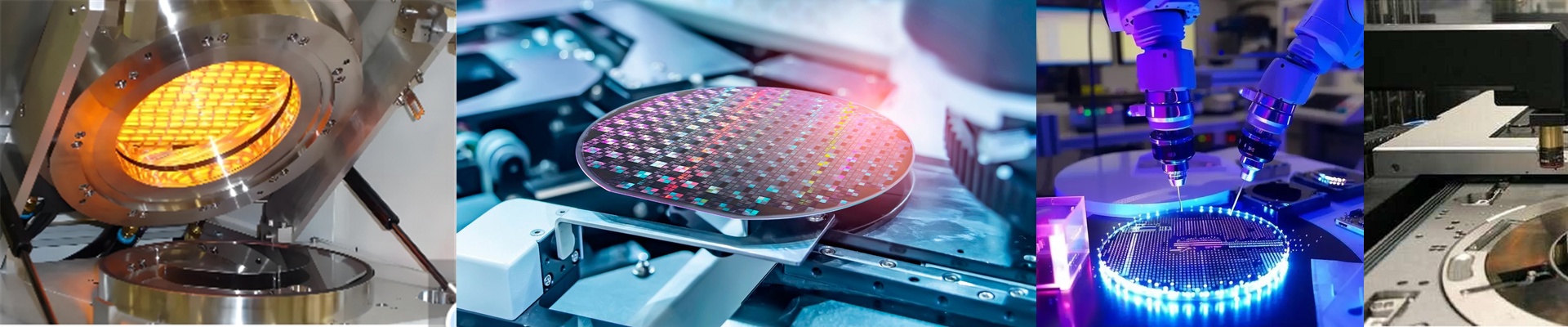
On the line, the clock doesn’t wait for anyone. A 300 mm wafer flows from coat to soft bake, then into exposure, and the thermal budget you set in those first minutes writes the rules for CD uniformity, sidewall angle, and—bottom line—yield. When the bake lamp starts to drift, throws hotspots across the field, or fails outright, the line stops, the queue backs up, and your cost per wafer climbs before the first pattern is even written. Polyimide bake comes down to repeatable heat. You have to drive the resin into the right Tg window without solvent burst, without skinning, and without adding particles. Infrared can deliver that control—fast and stable—but only if the emitter, optics, and control loop are treated as one thermal system, not a box with a heater bolted on.
What actually matters under the hood
We built the polyimide bake infrared lamp around a near-infrared (NIR) emitter matched to how polyimide and photoresist absorb energy. The spectrum is tuned to heat volumetrically and quickly, while keeping surface overshoot off the wafer. Peak wavelength sits in the 0.7–1.2 μm band, so you’re curing through the film, not just toasting the top layer. Thermal uniformity is specified to ±0.1°C across the wafer plane—measured at the substrate, not guessed from the chamber wall. That number matters because ΔT across the field turns straight into ΔCD across the die. Hold that ±0.1°C band and linewidth variation tightens, bias drops, and sidewall profiles stay consistent edge to edge. Temperature repeatability lands at ±0.5°C, run to run, day to day, year to year. Closed-loop control uses a high-resolution sensor at the wafer plane, calibrated traceably to NIST standards. The lamp output is PID-controlled down to the millisecond to kill drift mid-bake, and the setpoint snaps back the moment the stage moves. Zero particle generation isn’t marketing copy—it’s a design requirement. The lamp housing is sealed, and the optical path uses cleanroom-compatible materials. The emitter runs clean: no open filaments, no outgassing under bake conditions. In a Class 1–100 cleanroom, particle counts stay in spec because the lamp itself isn’t a source. Reliability is built into the materials and the thermal architecture. The NIR emitter is rated for 5,000+ hours with under 5% output drop. We run it hard, at full duty cycle, because polyimide bakes can’t be throttled without risking the profile. Thermal mass is low enough to switch setpoints quickly, but the mechanical interface stays rigid so focus and alignment hold through thousands of thermal cycles.
Why this approach fits litho, polyimide, and the line
In lithography, soft bake sets solvent removal and polymer density. Hard bake locks the profile before etch or lift-off. If the bake is uneven, photoresist flows differently across the wafer and your critical dimension walks the field. If the bake is slow, throughput bleeds. If it’s inconsistent, you spend your days chasing excursions. Our infrared lamp shrinks the bake window without handing away control. Polyimide sees a fast ramp to target, then holds steady. The payoff is a shorter thermal budget, lower energy per wafer, and a process window that stays stable. The lamp integrates with standard coat/bake tracks and can be dropped in as a direct retrofit on many platforms, so you keep your existing automation and interfaces. You get uptime. The lamp is built for 7×24 operation, with no unplanned downtime across multi-month runs. When the line is up, the lamp is up. Maintenance is scheduled, not an emergency—swap the emitter on a planned interval and keep the scheduler moving. You get repeatability. Across shifts, across tools, across fabs, the temperature profile lands the same every time. Process windows tighten. Excursions fall off. Yield stops jumping around. The lamp doesn’t care about line voltage or ambient swings; the control loop compensates in real time, so the bake reads the same from the first wafer of the day to the last. You get cleanliness. No particle shedding. No contaminants introduced. No outgassing that can foul the lens or the wafer. The bake stays in the clean path, where it belongs. You get energy efficiency. Infrared heats the wafer directly, not the chamber. Energy goes where it’s needed, and the lamp recovers fast after setpoint changes. That cuts kWh per batch without compromising the bake.
What you need to know to run it right
The lamp is compatible with Class 1–100 cleanroom environments and integrates into coat/bake tracks and dedicated polyimide bake stations. Installation comes down to a stable mechanical mount and proper alignment to the wafer plane. Keep the optical path clean; we supply a service kit and a straightforward procedure for maintaining the window and emitter. Because the lamp heats fast, the thermal profile is sensitive to the stage and the wafer backside. Confirm stage temperature uniformity, and make sure the wafer backside is free of films that can change absorption. The lamp can be tuned, but start from a measured baseline, not an assumption. Plan for continuous operation. The lamp runs hot, and the housing needs cooling during scheduled maintenance. Schedule the emitter replacement around your downtime windows. The life is long, but it’s finite—treat it like any other consumable: predictable, scheduled, and documented. If your process uses multiple bake steps or different polyimide formulations, the lamp can be configured with recipe-based control and multiple setpoints. The controller stores profiles, and the interface lets operators pick the right bake sequence without guesswork. Lock the profiles down once, then run them consistently. The line keeps moving. The wafer keeps flowing. With this polyimide bake infrared lamp, the thermal step stops being the bottleneck and becomes a controlled, repeatable part of the process.